
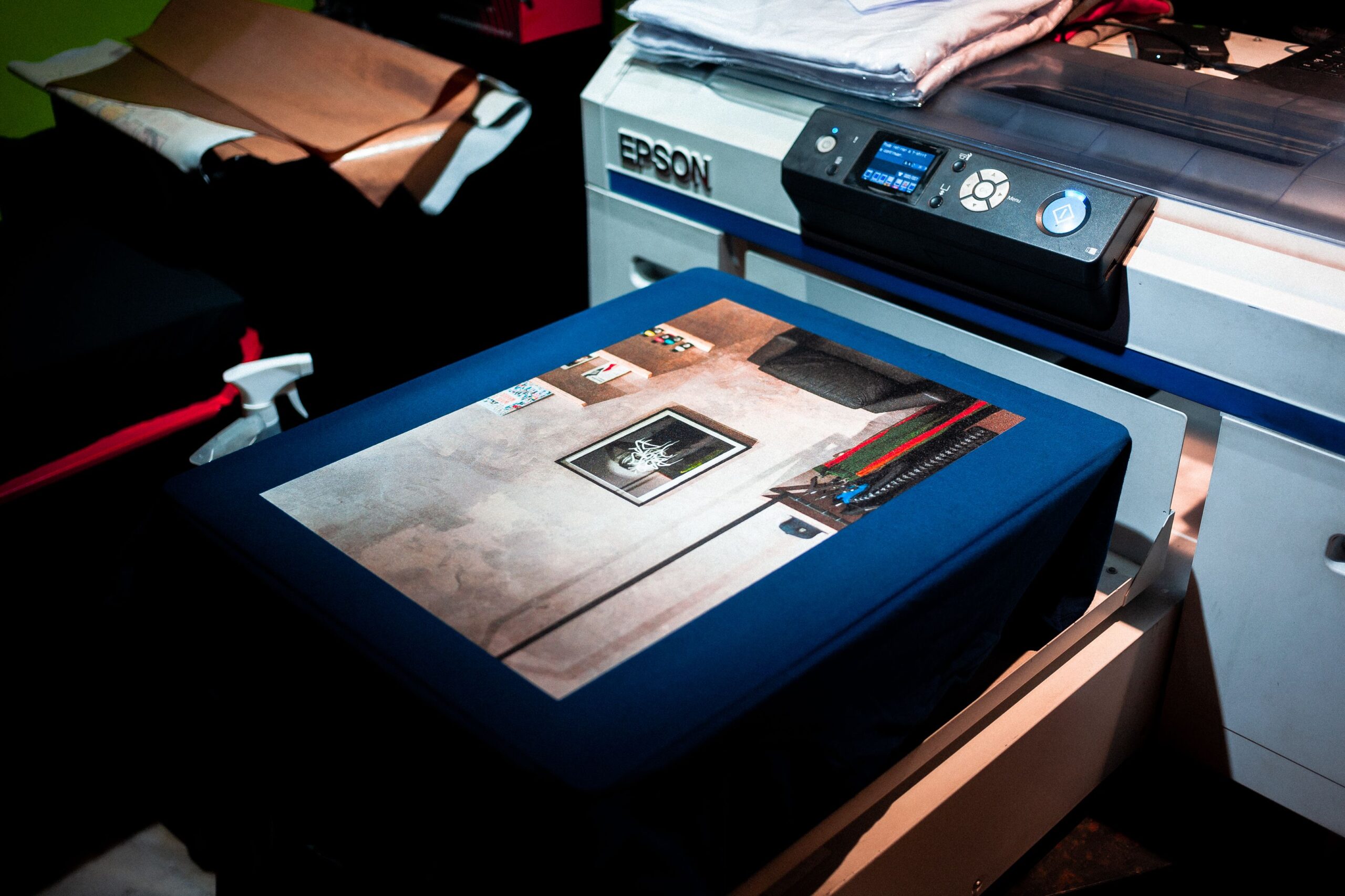
Starting a custom T-shirt printing business can cost less than opening a traditional clothing store. You can begin by outsourcing printing, purchase a heat press for small orders or invest in equipment for larger production runs.
The important question is how much each finished shirt costs to produce. A business selling T-shirts for $25 may earn a reasonable profit on a simple design but lose money on orders involving expensive materials, lengthy preparation or free shipping.
Before buying equipment, calculate your startup expenses, choose a printing method and identify customers who need custom clothing. Local businesses, schools, sports teams and event organizers are possible markets for printed apparel.
Choose the Type of T-Shirt Printing Business You Want to Start
Custom T-shirt businesses generally serve two types of customers. Some sell original designs through online stores, while others print clothing ordered by individuals, organizations and companies.
A business specializing in local orders might produce 30 shirts for a family reunion, 100 for a company event or personalized uniforms for a small restaurant.
According to Shopify, production methods include print on demand, small batch manufacturing and bulk printing. Each has different equipment costs and inventory requirements.
For beginners, working with a printing supplier reduces the initial investment. Purchasing equipment gives you more control over production but adds maintenance and operating expenses.
Compare T-Shirt Printing Methods and Equipment Costs
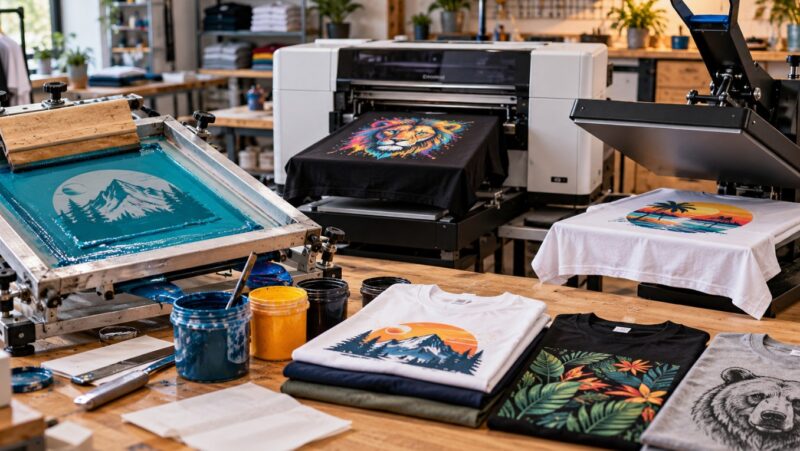
The right equipment depends on the number of shirts you expect to produce, the artwork and the fabric.
Starting With Heat Transfers
One approach is purchasing ready-made DTF transfers and applying them to blank shirts. You can offer colorful designs without owning a specialized garment printer.
For this workflow, heat press machines apply controlled heat and pressure to compatible transfers. The required temperature, pressure and pressing time depend on the transfer material and garment, so testing samples is essential.
Consider platen size, temperature consistency, electrical requirements and available workspace before purchasing equipment.
Moving Into Screen Printing
Screen printing can reduce production costs for larger orders using the same design.
However, preparing screens and cleaning equipment take time. A small order with several colors may be more expensive to produce than the same artwork using purchased transfers.
For a new business, order volume should guide equipment purchases rather than buying machinery before finding customers.
Calculate the Startup Costs of a Small T-Shirt Business
Startup costs include more than printing equipment. You may need blank garments, design software, packaging, business registration and a basic website.
The following example is a hypothetical budget for a small home-based operation using purchased transfers.
Actual costs depend on equipment, suppliers and location. The U.S. Small Business Administration recommends separating one-time startup purchases from recurring expenses when preparing a business budget.
You can reduce initial spending by purchasing shirts for confirmed orders instead of stocking every size and color. See how to plan your initial marketing budget as you prepare your launch.
Calculate Your Production Cost Per T-Shirt
Knowing the cost of one finished shirt helps determine your minimum selling price. For another view of the costs that shape a custom tee, see this production cost and pricing guide.
Start with the blank garment, printing materials, labor, packaging and payment processing. Add a reasonable allocation for machine use and other production expenses.
Consider a hypothetical order of 50 printed shirts.
At $9.50 per shirt, producing 50 units costs $475. Selling them for $18 each generates $900 in revenue.
That leaves $425 before payment processing, marketing, taxes and other business expenses not included in the example.
Remember to include failed prints and damaged garments when estimating average production costs. A batch with several unusable shirts costs more per sellable unit.
Set Your Selling Prices and Profit Margins
A common pricing mistake is adding a small amount to production costs without considering other business expenses. SCORE’s guidance on pricing products or services likewise emphasizes accounting for material, labor and overhead.
Suppose a finished shirt costs $9.50 to produce and sells for $20. The difference is $10.50 before additional selling and administrative expenses.
The production margin percentage is calculated as follows.
Production margin = (Selling price minus production cost) ÷ Selling price × 100
For the example above, the production margin is 52.5%.
That percentage is not the final net profit margin. Shipping subsidies, advertising and other expenses will reduce earnings.
Different customers may also justify different pricing structures. A single personalized shirt usually involves more preparation per unit than 100 shirts using one identical design.
Calculate How Many Shirts You Need to Sell to Break Even
Break-even analysis identifies how many products must be sold to cover fixed expenses.
The SBA break-even calculator uses fixed costs divided by the difference between the selling price and variable cost per unit.
Imagine your monthly fixed expenses are $600. You sell shirts for $20 each, with variable costs of $11 per shirt, including production and applicable transaction expenses.
Break-even quantity = 600÷(20 minus $11) = 66.67 shirts
You would need to sell at least 67 shirts during that month to cover the stated costs.
If demand falls below that level, the business would operate at a loss under these assumptions.
Use your own supplier quotations and monthly expenses when calculating the actual break-even point.
Find Customers Before Expanding Production

Custom printing businesses can serve local organizations that regularly order clothing for events or employees.
Possible customers include schools, sports clubs, restaurants, construction companies and event organizers.
Prepare a small sample collection showing different shirt materials and print finishes. Explain minimum order quantities, production times and available customization options.
For online sales, publish accurate product photographs and size charts. Confirm artwork approval before printing custom orders.
Requesting a deposit for large personalized orders can reduce the financial risk of customers canceling after production begins.
Keep Track of Inventory, Waste and Operating Expenses
Inventory can become expensive when a business purchases too many sizes, colors or garment styles.
Track blank shirts, transfer materials and completed orders separately. Record damaged garments and printing mistakes instead of treating them as invisible losses.
When estimating product profitability, distinguish direct production expenses from other operating costs.
The IRS explains the cost of goods sold for businesses that manufacture or purchase products for resale. Inventory valuation and tax treatment depend on the applicable accounting rules.
Review equipment maintenance, utility expenses and supplier prices regularly. A small increase in material costs can reduce margins when repeated across hundreds of shirts.
The Bottom Line
A custom T-shirt printing business can begin with outsourced production or a small heat transfer setup. Larger equipment purchases make more financial sense after demand becomes consistent.
Before accepting your first orders, calculate the production cost per shirt, set prices that cover business expenses and estimate the number of sales needed to break even.
Start with a limited selection of garments and designs. Once customers begin ordering regularly, use actual production costs and sales figures to decide when expanding the business is financially justified.