

Remote work can turn geography into a financial tool. Cost-of-living arbitrage, often called geo-arbitrage, means earning an income linked to a higher-paying market while living in a place where everyday expenses are much lower.
Simple math explains the attraction. A high salary means less if housing, taxes, healthcare, food, and transportation consume most of it.
Move somewhere cheaper without losing too much income, and monthly savings can jump quickly.
One example involves a San Francisco data scientist whose annual expenses drop from $72,000 to $32,000 after moving to Austin while keeping the same job and salary.
That shift creates another $40,000 in potential annual savings without requiring a promotion, side hustle, or heroic budgeting spree.
Why Cost-of-Living Arbitrage Looks Different in 2026

Old assumptions about expensive and affordable cities are getting less reliable.
Currency swings, housing inflation, salary policies, tax rules, and remote-work restrictions can reshape the math surprisingly fast.
Income flexibility also matters, especially for workers building location-independent careers through models such as a Yeti Travel host agency, where travel advisors can work remotely and structure their schedules around their own availability.
Tokyo is a good example. A three-bedroom apartment costs about one-quarter of a comparable New York rental, while a meal for two costs about one-third of what diners might pay in Zurich or New York.
A weaker yen plus relatively low inflation in Japan has helped create that gap.
Housing pressure is still growing across Europe.
In Q1 2026, EU house prices increased 5.1% year over year and rents rose 3.0%, adding another reason to reassess cities that built their reputation on affordability.
Central Europe tells a very different story. Prague and Budapest once looked like obvious low-cost choices for internationally paid workers.
Since 2016, apartment purchase prices in both cities have climbed by more than 150%, while rents have more than doubled in several markets.
New York offers some of the highest salaries among major global cities, yet its position drops sharply once rent is deducted and disposable income becomes the focus.
Estimated living costs there are 88% higher than Lisbon, while several Southeast Asian destinations can be 65% to 75% cheaper than San Francisco.
A Stanford study covering 16,422 college-educated workers across 40 countries found average work-at-home time at 1.27 days per week in 2024/2025, compared with 1.33 days in 2023 and 1.6 days in 2022.
Where Remote Income Stretches Furthest

| Region | Costs / Example | Best For | Watch Out For |
| Southeast Asia | $800 to $1,500/month. Chiang Mai example: about $15,000/year, including $400/month rent. | Maximum savings potential. | Time zones, visas, inflation, currency risk. |
| Southern Europe | Lisbon: about $2,000/month. Spain: around €1,600/month in some cases. | Lower costs with strong infrastructure and European access. | Taxes and residency rules. |
| Latin America | Mexico City, Colombia, and Argentina can offer strong value. | North American workers who want compatible time zones. | Inflation, expensive expat areas, tax residency. |
| Japan | Tokyo housing can be far cheaper than New York. Japan also ranked cheapest in one iPhone price comparison. | Developed-market infrastructure at lower relative costs. | Move-in fees, visas, language, taxes. |
Remote income can create very different lifestyles depending on where it is spent.
A salary that feels tight in San Francisco, New York, or Zurich may cover far more in parts of Southeast Asia, Southern Europe, Latin America, Japan, or lower-cost U.S. cities.
Bigger savings usually appear when housing, food, transportation, and everyday services cost far less without forcing a major drop in income.
Southeast Asia
View this post on Instagram
Comfortable living costs in Thailand, Vietnam, and Cambodia can sit around $800 to $1,500 per month, giving remote workers a large gap between income and spending if their pay is tied to North American or Western European markets.
Chiang Mai shows how dramatic that gap can become.
One remote product manager spends about $15,000 per year there, including roughly $400 per month for rent. Comparable annual spending in New York is estimated at $85,000.
Even after taking a lower-paying job, annual savings in that example rise $155,000 to $195,000. Lower expenses more than compensate for reduced pay.
Daily life can also be inexpensive in categories that quickly add up, including food, transportation, local services, and housing.
Someone earning a solid remote salary can potentially save aggressively without living like a monk with a laptop.
Time-zone gaps can make U.S. meetings painful, visa rules can change, inflation can eat into savings, and currency movements can alter the calculation.
Southeast Asia works best for workers whose jobs allow flexible schedules and whose employers permit long-term international work.
Southern Europe

Costs in Southern Europe are higher than many Southeast Asian options, but workers gain European infrastructure, strong transit in many cities, established expat communities, and relatively easy access to other European countries.
Comfortable living in Lisbon is estimated at about $2,000 per month, or roughly $24,000 per year.
Spain can come in lower in some cities, with one model estimating living costs near €1,600 per month.
Portugal has built a digital-nomad framework, while Spain offers an inbound-expatriate tax regime that can be attractive in certain cases.
Spain may still offer attractive day-to-day costs, but housing is getting pricier fast. Residential property prices increased 12.9% year over year in Q1 2026, while prices for used homes rose 13.5%.
Actual tax results depend on residency status, income structure, employment setup, and individual circumstances, so tax planning warrants serious attention before a move.
It can be a strong pick for someone who wants lower expenses without giving up the conveniences of life in a developed European market.
Latin America
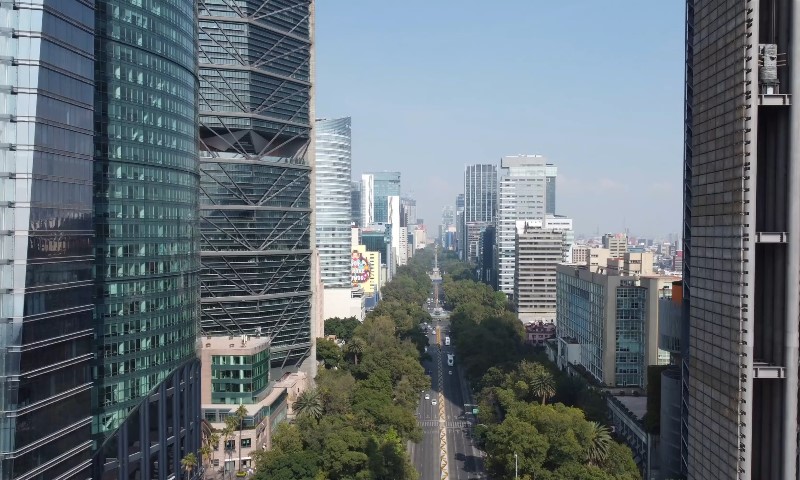
Mexico City is a strong example of how Latin America offers a compelling mix for remote workers tied to U.S. business hours.
A remote salary that feels ordinary in New York can stretch much further there, especially once housing and everyday services enter the calculation.
A worker based in Mexico or much of Central and South America can often keep a normal schedule with U.S. colleagues, avoiding 2 a.m. meetings and upside-down sleep patterns.
Mexico also has a large digital base, although access varies by location. In 2025, 78.3% of Mexican households had internet, while internet use reached 88.9% in urban areas and 75.2% in rural areas.
Mexico, Colombia, Argentina, and several other countries may offer strong value depending on currency conditions and local inflation.
Big savings can still disappear if a worker chooses an expensive expat neighborhood, relies heavily on imported goods, or ignores tax-residency rules.
Japan

Japan has spent years carrying a reputation as an expensive destination, yet exchange-rate changes have altered the picture.
Currency gains do not mean every expense is staying flat. Japan’s consumer prices increased 3.2% in 2025, although the housing component rose only 1.0%, compared with a much steeper 6.8% increase for food.
Compared with New York, Tokyo housing can look dramatically cheaper, particularly for larger apartments.
Japan is reported as the cheapest market in one international comparison for buying an iPhone, showing how currency shifts can change purchasing power outside housing.
Infrastructure, public transportation, safety, cleanliness, and service quality add weight to Tokyo’s case.
Japan is not a universal bargain. Apartment size, move-in fees, language barriers, visa rules, and international tax questions can complicate a relocation.
Still, Tokyo shows why remote workers should keep rechecking assumptions.
What are the Risks of Geo-Arbitrage
| Risk | Key Point |
| Salary Cuts | Lower-location pay can reduce savings. |
| Return-to-Office | 55% of Fortune 100 companies required full-time office attendance in early 2026, up from 5% in 2021. |
| Rising Costs | Vietnam and Thailand are estimated to be 20% to 40% more expensive than three years earlier. |
| Currency Risk | Exchange-rate shifts can quickly change purchasing power. |
| Taxes and Visas | Residency, tax, and visa rules can add costs and complications. |
| Reality vs. Estimates | Test a destination before committing to a long lease. |
Cost-of-living arbitrage can work extremely well, but it is not free money.
Salary Cuts
Employers may adjust compensation when workers move to lower-cost areas.
A large enough cut can erase much of the advantage.
Before relocating, workers should check company policies on pay bands, tax registration, approved work locations, and international employment.
Return-to-Office Rules
About 55% of Fortune 100 companies required full-time office attendance in early 2026, compared with only 5% in 2021.
A move built around permanent remote status can become messy if an employer changes policy.
Anyone planning a major relocation should consider job portability, not just current remote-work permission.
UK government research found that many companies restrict how many days employees may work overseas and monitor work locations to reduce corporate-tax, payroll, and permanent-establishment risks.
Some also restrict activities such as signing contracts or meeting clients while abroad.
Rising Local Costs
View this post on Instagram
Vietnam and Thailand are estimated to have become 20% to 40% more expensive during the previous three years.
Housing in popular neighborhoods can rise even faster.
Planning with today’s exact budget can be risky. Adding room for future rent increases, inflation, and currency changes creates a safer margin.
Currency Risk
Exchange rates can create a great deal, then quietly take part of it away.
Japan’s current value shows the upside. A future currency reversal could reduce that advantage for workers paid in dollars or euros.
Keeping savings in several currencies or maintaining a larger emergency fund may help reduce exposure.
Taxes and Visas
Cross-border remote work can create tax consequences for the employer too.
OECD guidance updated in 2025 explains that an employee’s home office abroad may create a taxable business presence in some circumstances.
Working there for less than half of total working time generally would not create one on its own, but longer arrangements can require closer analysis.
Tax residency, double-taxation treaties, employer obligations, local registration, visa conditions, and banking rules warrant attention before a long-term move.
A cheap apartment is not much of a bargain if a visa problem forces an unexpected exit.
FAQs
A Wrap Up
Cost-of-living arbitrage can help remote workers keep more of what they earn by pairing a high income with a lower-cost location.
Southeast Asia offers some of the biggest savings potential, Southern Europe provides a solid balance of cost and comfort, Latin America works well for U.S.-aligned schedules, and Japan has become more competitive thanks to currency shifts.
Lower-cost U.S. cities can also deliver meaningful savings with fewer legal and tax complications.