
Most freelancers budget for the flight, the first month of rent and maybe a decent chair to work from. Then the paperwork arrives. Government fees are smaller than people expect: registering a business in Montenegro costs €8 in state fees, and most residence permits below stay under about €250 in official charges.
Most of the money goes on what surrounds those fees, such as certified translations, private health insurance, social contributions and an accountant who knows the local rules. Income thresholds and tax treatment matter even more, since they decide whether you qualify at all and how much of your income you keep.
| Country | Official fees | Income bar and tax angle |
| Montenegro | €8 to register a company; permit fee not published online | Nomad income exempt from income tax and social contributions |
| Croatia | About €88 in the country, about €149 via a consulate | €3,622.50 a month; nomad income exempt from income tax |
| Spain | Modest form 790 fees | About €2,850 a month; €80 base social security in year one |
| Portugal | €110 visa fee | €3,680 a month plus about €11,040 in savings |
| Estonia | €120 D visa or €90 C visa | €4,500 a month gross; tax resident after 183 days |
| Cyprus | €70 permit plus €70 registry entry | €3,500 a month net; tax resident after 183 days |
| Germany | Up to €100 for the residence permit | No fixed figure; you must show you can live on your income |
| UAE | USD 287 for the Dubai programme | USD 3,500 to 5,000 a month; no personal income tax |
| USA | USD 185 visa fee plus USD 250 integrity fee | No nomad visa; visitors may not work in the country |
Montenegro
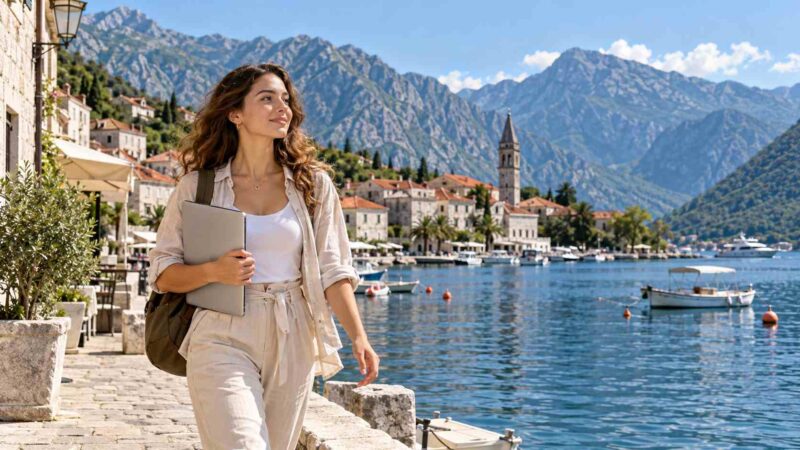
Montenegro sits at the cheap end of almost every comparison. Freelancers usually choose between a digital nomad permit and a company of their own, and many weigh the two with local advisors like Vega Plus before filing anything.
The official digital nomad portal says the permit runs for up to two years, can be extended for two more, and must be decided within 40 days. The portal does not publish a permit fee, so confirm the amount at the counter.
The tax treatment is the real draw. Montenegro’s Law on Personal Income Tax exempts digital nomads from income tax and social contributions on earnings from employers not registered in the country. Those who prefer a company pay €5 to the Tax Administration and €3 to the Official Gazette, according to the government’s business registration page, and can file online through eFirma.
Croatia

Croatia publishes its costs down to the cent. Apply at a police station and you pay €46.45 for temporary stay, €9.29 in administrative fees and €31.85 for the biometric card, according to the Croatian Ministry of the Interior. Through a consulate, the bill becomes €55.74 plus €93 for a long stay D visa.
The income bar is the steeper part: €3,622.50 a month, or €43,470 in the bank for a 12 month stay. If that figure makes you pause, compare where a remote income stretches furthest before choosing a base. Documents must be translated by an authorised translator, the permit lasts up to 18 months, and income earned under it is exempt from Croatian income tax.
Spain
Spain’s income requirement is roughly €2,850 a month, set at twice the national minimum wage. Applications for the international telework residence go through the Spanish government’s procedure page, with fees paid through form 790. The official charges are small, so the real budgeting starts after approval.
Freelancers who register as autónomos get the “tarifa plana”, a reduced social security payment of €80 a month for the first 12 months, as EuroDuty’s freelance tax comparison notes.
With a surcharge added on top, the real 2026 payment is €88.64. From month 13, contributions follow your net income and can climb past €300 a month.
Portugal
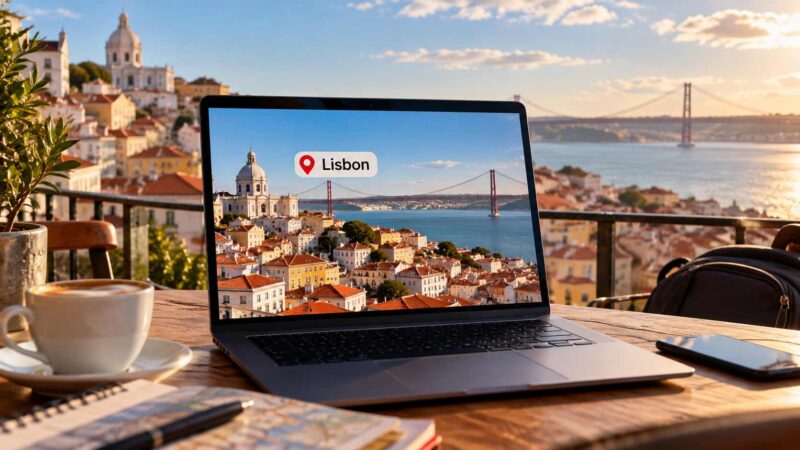
Portugal charges a flat €110 for a national visa application, according to the Portuguese Ministry of Foreign Affairs.
The income requirement is four times the minimum wage, which puts the D8 threshold at €3,680 a month. Applicants are also expected to show savings of around €11,040.
Year one can be kind once you register as self employed. New self employed workers are generally exempt from social security contributions for their first 12 months, and the simplified regime taxes only 75% of service income. The tax office can be slow, so leave extra time for registration.
Cyprus
Cyprus asks for €3,500 a month in net income, after taxes and contributions. The Civil Registry and Migration Department charges €70 to issue or renew the permit, and first time applicants also pay €70 to register in the aliens registry.
Applications are filed in Nicosia within three months of arrival.
The first permit runs for one year, and renewals can stretch to two. Spend 183 days on the island in a tax year and you become a Cypriot tax resident.
Family members may join you, though they are not allowed to work or run a business in Cyprus.
Germany
Germany has no nomad visa, but it does have a dedicated residence permit for freelancers, known as Freiberufler. According to the government’s Make it in Germany portal, the residence permit costs a maximum of €100 and is initially granted for up to three years. Instead of a fixed income figure, you must show that your freelance work can support you, usually through client letters and a business plan.
The fees are cheap, but the running costs are among the highest on the list. You become a German tax resident from day one, income tax runs on a progressive scale from 14% to 45%, and freelancers often pay €400 to €800 a month for health insurance.
The upside is a path to a settlement permit after five years of successful self employment.
United Arab Emirates
The UAE offers a one year virtual work residence that lets you sponsor yourself. The official UAE government portal lists a fee of USD 287 for Dubai’s virtual working programme and an average income of USD 5,000 a month for employees. The federal route asks for USD 3,500 a month instead.
The biggest number sits on the other side of the ledger: the UAE levies no personal income tax.
Valid health insurance is mandatory, and the entry visa gives you 60 days to complete residence formalities. Rent in Dubai is high, so the tax saving needs to outweigh housing costs.
United States
The United States has no digital nomad visa, which makes it the strictest option here. The State Department’s visitor visa page states plainly that B1/B2 visitors are not permitted to accept employment or work in the country.
Longer routes for self employed people exist, though they usually involve investment, extraordinary ability claims and legal fees.
Even a simple visit has grown more expensive. Visitors who need a visa pay USD 185 for the application plus a USD 250 visa integrity fee introduced in October 2025, while Visa Waiver travellers pay about USD 40 for ESTA.
Stay long enough to pass the IRS substantial presence test, roughly 183 weighted days, and you may be treated as a US tax resident.
The Costs That Never Appear on a Fee Page

Every country above asks for supporting documents, and those documents carry their own bills. Criminal record certificates, contracts and bank statements often need an official translation plus an apostille, and a single document can need stamps from several offices. Many certificates expire within a few months, so timing matters as much as price.
Health insurance is the other constant, since nearly every permit requires cover for your whole stay. Banking adds steady leaks through currency conversion, transfer fees and the hours spent proving where your income comes from.
A closer look at what changes with taxes, banking and coverage helps you spot those leaks early.
Frequently Asked Questions
The Bottom Line
The permit fee is the smallest line in a freelancer’s first year abroad. Income bars, tax treatment and the document trail decide the real budget, and they vary far more than the fees do.
If rent weighs as heavily as tax in your plans, compare living costs in Germany and the Western Balkans before committing.